


DOG CARPETS (2007)
Interview with Ondrej Brody and Kristofer Paetau by Kristofer Paetau, april 2008.
What is this project about?
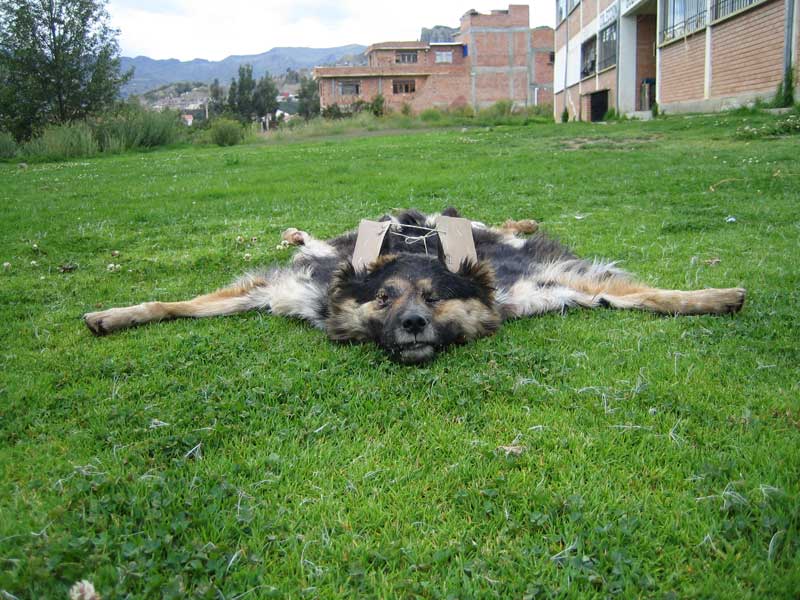
Ondrej: The dog carpets are essentially about society's hypocrisy. It questions the special status that dogs and cats have in our, western society. Although we can see that in China, despite the local culture and cuisine, the pet culture is on its rise as well. The Bolivian experience was about hypocrisy as well, but it involved on a larger and direct scale mechanisms and structures within the society.
Kristofer: It's about the tradition of producing carpets with wild animals as a hunting fetish. But in this case we were using an inappropriate animal, a pet - and like this we wanted to question the values behind this tradition. Ondrej was speaking to me about this idea already before the Bolivia show, but when I got the opportunity to participate in that show I thought it would be interesting to realize the dog carpets there with Ondrej, mainly for three reasons: more adventure, lower production costs and the problem of street dogs in South America (in contrast to the beloved inhouse pet in North America and in most European countries).
How did you proceed to realize the work and how important was the local context for realizing the work?
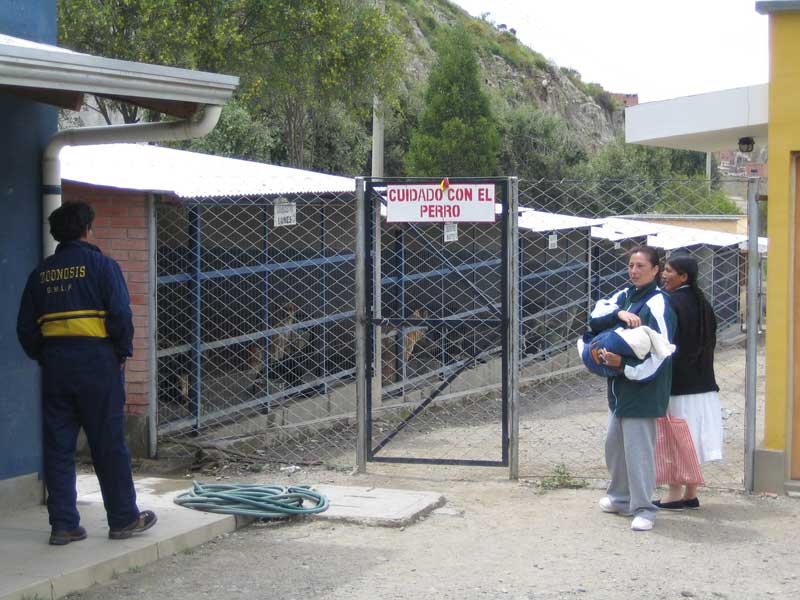
Ondrej: The context is always important. In fact in comparison to most countries in Europe, in Bolivia (La Paz) there is a great concentration of street dogs. We were informed then, that there is a municipal company called Zoonosis which is in charge of hunting street dogs and dealing with animals within the city of La Paz. They catch about 100 dogs a week and execute them every friday noon. We were supposed to prepare a project that would take place in a city Museum called Museo Tambo Quirquincho. The communication with Zoonosis was relatively simple, since both institutions were run by the city. We requested to obtain 10 sacrificed dogs for our "installation". This seemed to be a perfect paradox. A hunting carpet from a dog that is being hunted by the society.
Kristofer: The local context was striking: when we went out in the center of the city at night there were dogs all over the streets eating garbage. We discovered that there is a whole municipal organisation dealing with the problem of street dogs in La Paz. The municipal service Zoonosis is hunting for street dogs during night time and collecting the dogs in a kind of dog prison and then killing them, about 100 dogs every week. We went to visit Zoonosis and talked to them about our project and we also explained our project to the director of the Museo Tambo Quirquincho. She wrote a recommendation letter for us and with this letter we went to Zoonosis again and met with the director. He signed and gave us a small post-it to authorise us to get 10 killed dogs the following week…
Tell us about the killing. Did you assist to it and if yes, how did you feel and what did you think about at that moment?
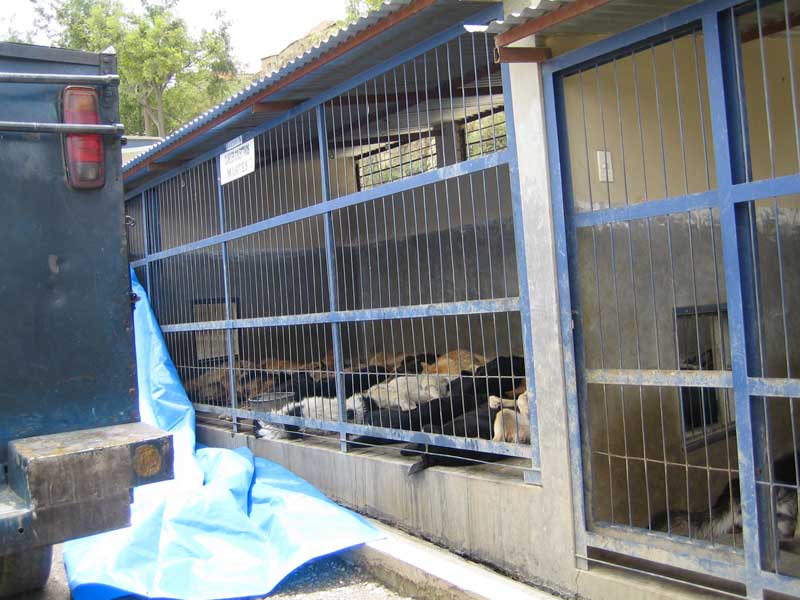
Ondrej: The killing was a terrible experience. We arrived to Zoonosis maybe one hour before they began with the execution. About half an hour before they started with the execution, the dogs were quite restless, nervous, barking a lot as if this was their last chance to show that they're alive. When they started killing them the whole cage was in complete silence. I'm sure that the dogs were completely aware what was going on…
Kristofer: Yes we assisted to the killing, which took place around one o'clock in the afternoon. The gates were closed so nobody could see what happened from the outside. The place became completely calm and the dogs stopped barking. I was nervous. I had taken my digital camera because I wanted to record something of this moment - which was of course forbidden - and at the same time it was absolutely not the moment to make photographs… So I nervously pushed the button a couple of times without really looking. Hiding away with the camera from the 5 or 6 guys running around making injections to the dogs with big plastic bottles filled with poison. All dogs pissed and shitted after they got the injection. They died in about 30 seconds and were left there lying in their own excrements. I felt miserable.
What happened after the killing?
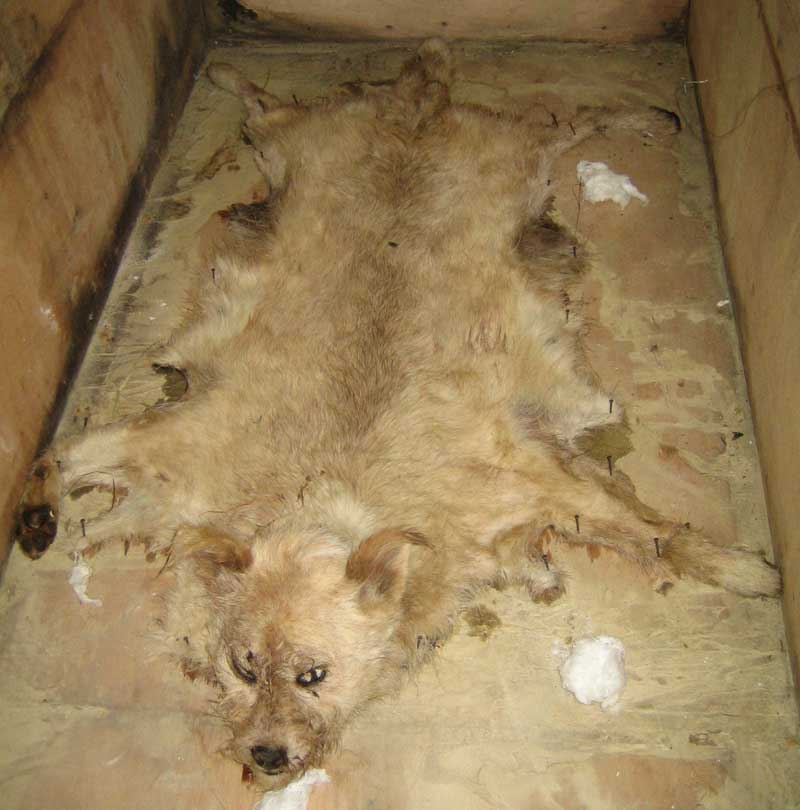
Ondrej: After the execution Zoonosis offered us a transport of the cadavers to the taxidermist….or sort of taxidermist…we did some research before (there is no training or career of taxidermy in La Paz) and seemingly the only person who could help us to realize the taxidermy was working in the Museum of Natural history… as a guard. He was also responsible for most taxidermy work within the Museum. The quality of the exhibits were quite terrible but we didn't have any other choice.
Kristofer: We were asked to chose "our" 10 dogs which were put aside for us and put into plastic bags. The act of picking 10 freshly killed dogs out of maybe 80 killed that day was also like straight out of a nightmare, but I was surprised and terrified to see how easily I started looking at the dead bodies just as aesthetic objects, trying to make the best choice. Zoonosis then gave us a ride with the dead dogs to the Museum of Natural History, where we had found the only taxidermists of La Paz: the janitor of the museum and his friend the night-guard who practice taxidermy as a self-taught hobby (doing the taxidermy for the collections of the Museum of Natural History of La Paz as well). The taxidermy that those two fellows did was horrible. You could still feel and see the meat and the bones in the legs and the dogs were stinking like hell…
How did you display the work in the Museo Tambo Quirquincho?
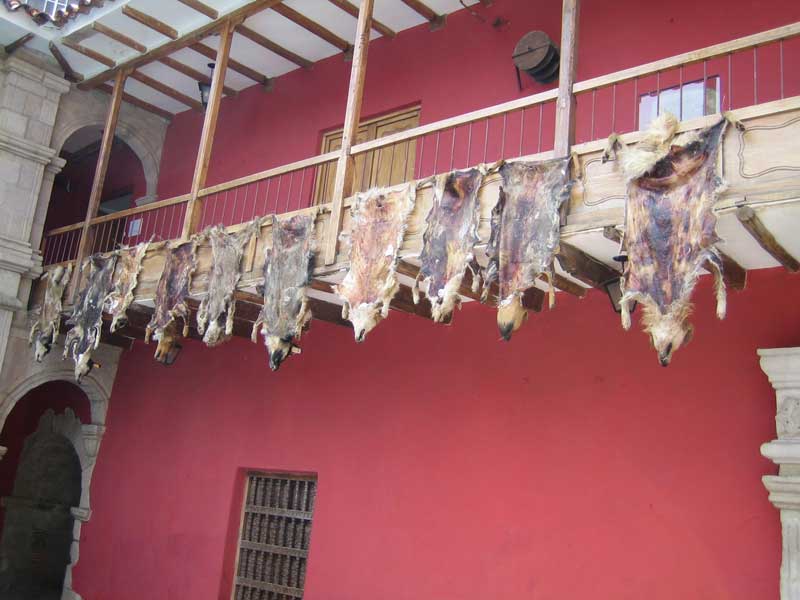
Ondrej: The carpets were not ready for the opening. They were still wet and extremely stinking. We decided to hang the dog carpets in the patio of the museum in a way like you hang clothes to dry. The idea was that the dogs would be drying during the time of the show. Visually it was certainly a freak show.
Kristofer: We could not show the work as planned since the dogs were not dry yet. So we wanted to just put them up to dry outside, in the courtyard of the museum. This was a terrible "installation". But since the whole show was all about "the process", we and the curators accepted this display. The museum director didn't like it though, so the next day we had to put them into a smaller courtyard where the public could not see them. But since the show was about the process, the museum was open for visitors before the opening as well and the display of the hanging dogs was seen by a couple of persons on that one day when we first hang them up to dry in the courtyard of the museum…
What were the reactions to the work in Bolivia, La Paz?
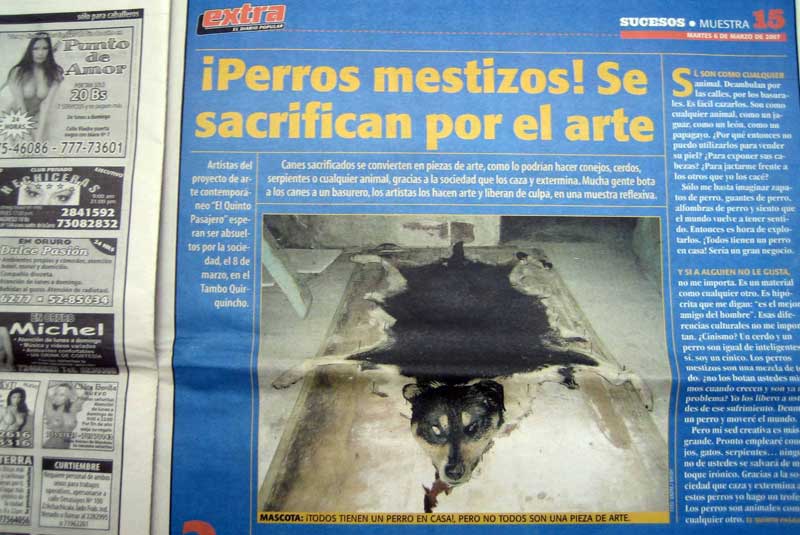
Ondrej: It created a scandal. The animal right people pushed the Mayor to investigate the matter and ordered the same city company, Zoonosis - that gave us the dead dogs - to give him a report and an explanation of the situation. So what Zoonosis did was to enter into the Museum and steal the carpets from the show with the help of the Museum director herself… it was a complete paradox since we had all the legal and written permissions from the Museum and from Zoonosis to realize our project. We got a phone call to the hotel where we were staying and ready to leave from Bolivia the next morning, informing us that somebody is taking away - stealing our work. The scandal was covered extensively by the media… Different TV channels issued interviews and even set a confrontation between us and the animal right defenders…
Kristofer: During the one afternoon that the dogs were on public display in the courtyard of the Museo Tambo Quirquincho some visitors saw them and created a scandal, alerting TV stations, animal rights associations and making a lot of direct pressure on the mayor of La Paz, who actually has both the Museo Tambo Quirquincho and the Zoonosis under his control, since both institutions are municipal… So a couple of days later we got a phone call from the curator of the show, telling us that the dogs have been "removed" and that there is nothing we can do to get them back. The mayor had ordered Zoonosis to go to the Museo Tambo Quirquincho and remove the dogs, in collaboration with the director of the museum. When we arrived to the museum there were several TV crews there making interviews. We tried to get hold on the tapes from the different TV channels but because of the lack of cooperation of the director of the museum and of the bolivian curator we did not have a chance. We had our return flights the next day so there was no time to organize anything really. We even heard from the transport company we had hired to transport the dogs and other works we had made, that the mayor of La Paz had made a new law the same day, making it illegal to export dead dogs… Just in case we would have had some more in stock. He was very afraid of losing his job if the scandal would have spread internationally.
You decided to realize the Dogcarpets in Europe after the Bolivian experience. What do you think of this transition?
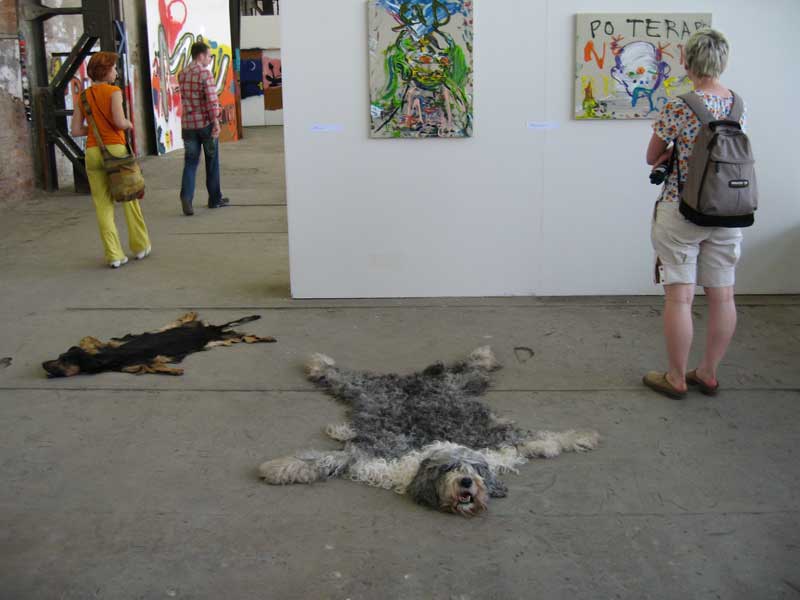
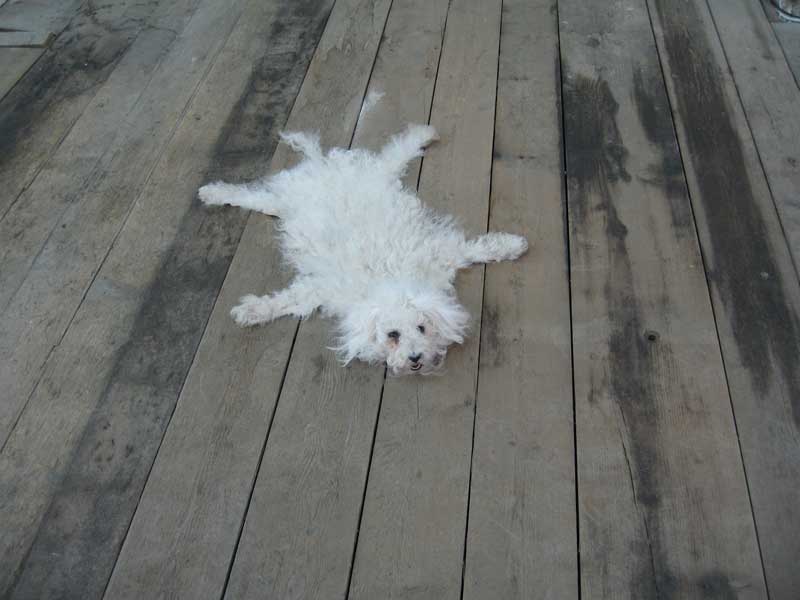
Ondrej: Well, actually I tried to realize the project in Prague shortly before coming to Bolivia. The idea of the carpets was already about one year old. The carpet itself is an extremely powerful image, which is inevitably confronting the viewer. Hypocrisy is still the main aspect of the work, even though it confronts you on a more personal level. The dogs are obviously pets and not street dogs, which is quite important, since I mentioned the special position pets like dogs and cats occupy within our society. People sometimes develop a closer relationship with their pets than with their own family or friends. Another striking difference is the realization of the taxidermy. I wanted the carpets resembling a bear or a tiger or other hunting carpets which are formally realized very professionally. The dogs and cats were obtained from a pet hospital, where they died mostly from natural causes and the owners didn't want to take care of the dead bodies…
Kristofer: After Bolivia I went directly to Rio de Janeiro for a residency of 2 months and Ondrej went back to Prague. As we were about to participate together in the Prague Biennale only 2 months later, we decided that we would like to show the Dog Carpets in the Biennale, so Ondrej concentrated on getting the dogs produced in Prague while I was working with rats in Brasil. The Prague dogs came from a hospital where the dogs had died and nobody had wanted to take care of the corpses. They are real pets that were abandoned after death - not street dogs. So the difference is quite big to the bolivian dogs. Also the context is completely different. I was more interested and more involved in the crazy Bolivian adventure, but I think the Dog Carpets - as they turned out finally - are very well made and very disturbing objects.


April 30th, 20082:05 pm at
husty
April 30th, 20082:08 pm at
Very powerful
April 30th, 20082:19 pm at
Very funny
April 30th, 20082:21 pm at
What to say¨nice shit!
April 30th, 20082:32 pm at
Brilliant and congratulations! Your work forces the viewer to oscillate between hypocrisy and conscience while turning on his/her ability to empathize. The animal righs groups have got it wrong here…the dogs were not killed nor harmed in the making of the work – instead the work speaks to the fact that over 100 dogs are murdered every week and that the artists are only doing what artists do: to ask us to pay attention!
Christian Bernard Singer
Eco-installation artist and curator (Canada)
www.christianbernardsinger.com
April 30th, 20083:10 pm at
I get your point…
But why is art so stuck in making ironic points these days? Everything is self-justifying by relation to canon or pop sociology or even worse… other contemporary works. Nothing is truly provocative or life-affirming anymore. Dogs enjoy a special status within human society, unlike other domesticated or wild animals. And society shows hypocrisy when it fails to provide for the care of their populations. No kidding, but aren't there more informative and interesting ways to communicate that via media? I don't object to the fact that you have dead dogs on the ground of an art exhibition. I just don't find it informative, let alone inspiring. This project is a perfect example of why contemporary art has lost its relevance to society at large. Artists produce works for their resume and for academic advocates. Sorry to be harsh, but work like this is why I got out of arts curating…
-Patrick Marckesano
April 30th, 20083:16 pm at
Great for home putting practice
April 30th, 20083:18 pm at
If you want more media, should be more ironic and cruel like Guillermo Vargas Habacuc (guy who tied starving dog up in exhibition). This more ironic than yours! This is maybe a movement in Latin art these days. cool.
April 30th, 20083:18 pm at
que quilombo que armaron chicos!!!!! felicidades! mejores son los callejeros..jejej
saludos!!!!! - roberto/unter
April 30th, 20084:18 pm at
kobusinki jacek ———– good works …………………
April 30th, 20085:53 pm at
Re: Patrick M
Ironic it is not, commenting on societies values it is. Art has always been about this.
April 30th, 20086:46 pm at
You should be in arrested, and not to consider yourself as artists.
FUCK YOU!
I hope someone will make carpet out of you.
I ll be glad to bye thazt peace for my private art collection.
April 30th, 20087:50 pm at
It is not art.This is sick and awful
April 30th, 20089:52 pm at
they are not artist. Artists represent cruelty and feelings, ideas, etc by using metaphores.
they and the gallery and all people involved in this project are perverse
and they dont deserve just a byte more nor a second.
agualicia
April 30th, 200810:52 pm at
You probably didn't read anything so you missed the whole context, they didn't kill the dogs, they just showed them in the form of carpets… You don't have to like it, I don't like it myself but I find it a strong statement.
May 1st, 200812:26 am at
What about pet owners who wear their dogs?
http://www.metro.co.uk/news/article.html?in_article_id=121735&in_page_id=34
May 1st, 20086:56 am at
Cool where can i get one made too?
May 1st, 20088:48 am at
gosh what next a cow cut in half, art my arse!
May 1st, 20088:50 am at
[quote]You should be in arrested, and not to consider yourself as artists.
FUCK YOU!
I hope someone will make carpet out of you.
I ll be glad to bye thazt peace for my private art collection.
[/quote]
arrested for what? dogs died from natural causes or were going to be destroyed. what is the difference between skinning them and deliberatly killing a cow so you can stuff your face with a beef burger.
Top work. Carry on.
May 1st, 20089:44 am at
totaly bonkers,mans best friend treated this way,this world never ceases to amaze me.
May 1st, 20081:47 pm at
iteresting!!
May 1st, 20085:41 pm at
are you selling the pieces? i hope not… anyway i hope one day tis south ameircan artists(????) can find a way to express theirself in a better way…
i wish to poor animals good luck.
dara dolunay
istanbul
May 1st, 20087:38 pm at
painful but true art
May 2nd, 20086:08 am at
a new direction in rating art idiot artists making idiot art for idiots
May 2nd, 20086:11 am at
use your body filty artis!
May 2nd, 20089:26 am at
This is not Art
May 2nd, 20083:09 pm at
ONDREJ & KRISTOFER you are post chineese comunist (f)artists
May 2nd, 20083:13 pm at
ondrej & kristofer - another accidents from czernobil
May 2nd, 20085:29 pm at
This is inhumane and irresponsible your content is -Torture not ART. As a HUMAN ANIMAL, avid artist and supporter of the arts; I ask that you stop this in sensitive approach at attention graving. Spreading cruelty is a CHEAP attempt at contemporary art and the lowest form of the medium.
YOU SUCK!
May 2nd, 20085:30 pm at
I'd like to see a carper made of the artist him self !
May 3rd, 20086:16 pm at
I find the work shocking and thought-provoking. A sad commentary on the schizophrenic narture of man's relationship to the natural world and especially domesticated animals that rely on us for their well-being.
As grotesque as the concept of this show is - I read the description with horror and fascination - I have the impression that the artists' conception, realization and documentation of the project were done to engage an audience with this extremely unappealing aspect of the reality of contemporary society.
Is it art? I believe so.
Is it ironic? No more so than the reality of society's often neglectful and cruel treatment of "man's best friend".
I'm not saying that I would necessarily enjoy visiting this exhibition, or if i encountered it without having read the "backstory" that I might not dismiss it it as grotesque, exploitative and unnecessary, but having read about it here, I find the project very compelling and thought-provoking. And sad. A looking glass in which we are all reflected. Art.
May 4th, 200810:04 pm at
we feel pity for the artists
May 5th, 200812:56 am at
Sorry, but this is a lame one liner…
Oh, we as humans are detached from the way we treat animals and often hypocrites in our level of sensitivity or outrage towards cruelty.
Wow. Pretty obvious if you asks me.
Has art become this irrelevant in the post modern era?
May 5th, 200812:58 am at
There's some very rare human skin lampshades and other leather "art" leftover from nazi deathcamps.
They made a strong statement too. And they will be long remembered (especially next year, when this silly exhibit is forgotten).
May 5th, 20084:36 am at
Aussi comdanable que ces deux monstres, la direction de ce musée ..Comment cautionner une telle monstruosité? …..
Amigos REVEILLEZ VOUS!!!!!!!! ON NE DOIS PLUS ACCEPTER L'INACCEPTABLE
Putin y'a pas un seul homme de lois qui ait des couilles pour mettre tous ces abominables responsables de crime contre animaux en prison ?? Triste
May 5th, 20084:54 pm at
First of all I don't think this is Art; I understand that Art sometimes is shocking and artist try to find another ways to shock people like the exhibition in Toronto and Montreal about human dead bodies without skin but is not Art.
In Mexico, Central and South America we have a sad situation, people buy or get dogs form friends they take them home and then 2 weeks later or maybe more they put them on the street, is an ugly situation because the government can only do one thing pick the dogs from the street and kill them.
Canada and USA is the same thing but the difference is that they take the animal to the SPCA or like they been doing lately in Montreal people move to another place and they leave their pets in the old apartment until the new tenants find them and take them to get killed or adopted(this doesn't happen very often).
So why people get all mad when they see that if is actually reality, part of our sick society is a very sad situation.
But please do not call this ART!
May 6th, 200812:18 pm at
Art is also about showing us the reality we live in, and here the image in the mirror is cruel butit still is an allegory (the pet transformed into a hunting carpet is speaking about a problem in society as the comment above explains very well).
May 7th, 20088:03 pm at
If you cared for animals in even the slightest way, you would not desecrate their bodies like this. As an artist and animal rights activist, I find this disgraceful and I am ashamed that anyone involved in the arts and arts community would think that projects like these deserve any attention or value. Would you skin a homeless person who died on the street to make a point? No. If you aswered yes, you only prove the point more clearly that you are a socio-psychopath looking to shock people. Shock art has been done and by way better artists than yourself. You want to make a difference? Then donate time, money or advocate for animal rights. Don't be a coward and hypocrite by using the same thing you deplore to prove a point. Your "art" is ridiculous and this has nothing to do with bringing attention to the way animals are treated. All this does is bring you negative attention which I am sure you are proud of since I would venture to say that you rejoice from negative comments. It probably fuels your work. You need to read about ethics and what animal rights is really about.
Jaded Raven (Canada)
May 9th, 20088:38 am at
"I'm sure that the dogs were completely aware what was going on…" (Ondrej)
best wishes
Elisabeth Steger (Vienna)
May 11th, 20082:36 pm at
The dogs might have sensed they are going to die on the moment of their extermination in the cages but they are as innocent as children in this filthy artwork!
May 11th, 200811:01 pm at
Hitler was also a great artist too, he showed the world how
stupid people can be and blindlessly follow their leader to the point where they are
completely careless regarding their fellow human beings. right?
anything can be art. thats not even the point. filming me eating yr moms pussy with a fork while recording
yr reaction to her screams would be a nice piece too. very smart! if we can eat live shellfish why not your mom?
thats hypocrisy!
what im saying is you are actually nothing but a popularity whore.
and everything you do allways comes backs to you!
remember that when yr miserable days shall come. and come they shall
May 13th, 20089:10 pm at
What a powerful cultural critique you could have made if you would have chosen to adopt and save those ten dogs. But this is so very sad.
May 15th, 200812:24 pm at
I don't think we would be discussing this here if they had adopted the dogs…
May 15th, 200812:37 pm at
Maybe people would have stopped Hitler sooner if there had been somebody who had made carpets out of exterminated jewish people and put them on display publicly? The problem of monstruosity is much more about hiding things than about showing them.
May 16th, 20084:30 pm at
thats a good point you got there, but i dont think what these guys did was done out of humanitarian reasons.
it was done from the same reasons the "ass licking" work was done, and all the other works here for that matter.
anyway…. in reality,even if that was the aim, i dont think these guys got fewer animals killed.
so what we're left with might have some artistic value, but the price for it, in my point of view doesn't come close
to worth it. just like the eating pussy with a fork example i gave before
May 16th, 20085:42 pm at
Great idea, good work.
Think about it…
October 9th, 20084:31 pm at
There are much better ways showing the world it's illness. But beeing an artist of course is an excusion for every sick shit to produce. Why don't you make carpets of dead and murdered people in poor or suppressed countries too? You could show the whole world that they did not care about those victims of war or hunger! Isn't that a really great chance for such brave and aesthetic guys like you to show everybody how big your spirit really is? Anja
October 9th, 20084:32 pm at
Thanxs anja for saying in that way, I agree with you, the status of art is really a way for showing how sick is the autor and produce every shit that his twisted freaked mind want to produce, stupids moorons, (hijos de puta, mejor) I'll like to make a carpet of those guys too.